
 Previous

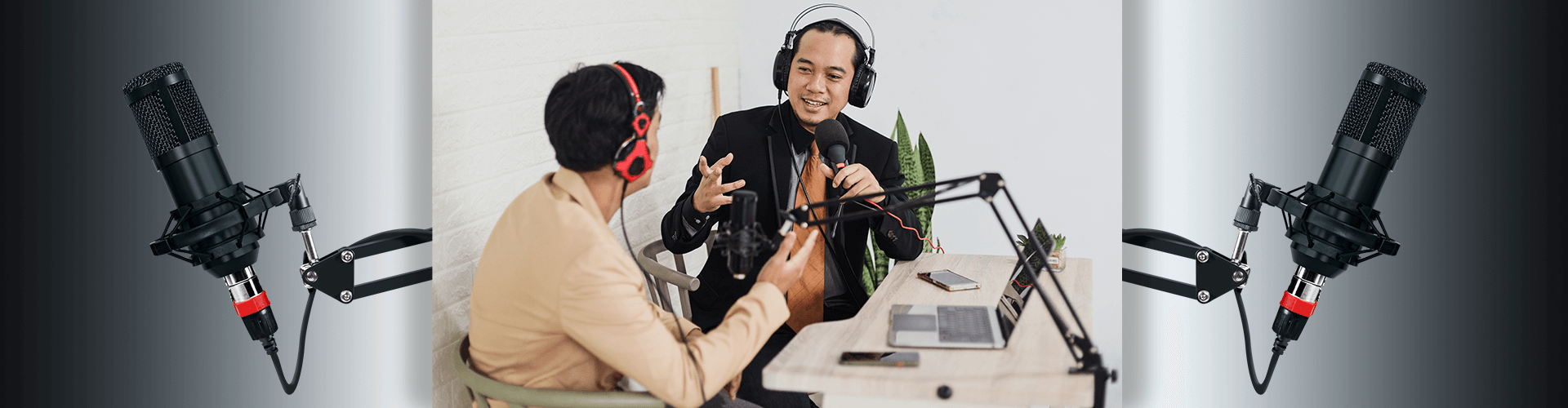
After 20 years and 300 episodes of The Toastmasters Podcast, I have learned a lot. Not only about podcasting, but about myself. My interview style has changed, and my skills have been supercharged.
Podcasting was relatively new back in 2006 when I was looking for a High Performance Leadership project, but I thought creating a podcast would be a great fit. That project, originally titled ToastCaster, marked the beginning of a journey I could not have fully anticipated.
Two years later, I met Bo Bennett, DTM, and Ryan Levesque, DTM, who had started their own podcast focused on Toastmasters. I assisted on a few early episodes of The Toastmasters Podcast, becoming part of the official team in 2014. A few years later, we formed a working partnership with the Toastmaster magazine and solidified our purpose—to amplify the magazine’s words, pictures, and stories. In 2024, I became the sole host, editor, producer, and audio engineer.
At first my passion for podcasting came from my geeky side combined with my love of Toastmasters. It was more about the recording, making sure the interview sounded great, and sharing the episode with the world.
I’ve mastered those podcasting skills, and now my passion revolves around creating quality content and bringing out the guests’ best stories. The technical aspect now involves research, preparation, careful selection of questions, and giving the audience something they can take away.
Improving My Conversation Skills
Podcasting is an excellent training ground for becoming a better speaker and storyteller. Just like a speech, a podcast can entertain, persuade, educate, and inspire, and it needs a message, a point, and a takeaway. Without visuals, it has to create pictures in the listener’s mind.
Prepping for a speech or a podcast requires thinking carefully about the audience ahead of time and the message you want them to take away. But in podcasting, the interview aspect adds another dimension. As the host, I constantly adjust the conversation in real time. It’s almost like using a GPS. The destination may be clear, but the path can change depending on where the discussion leads. I’m always thinking about the listener’s experience: Is this resonating with them? Is it clear? Where should I go next?
Through podcasting I’ve honed skills like adaptability, situational awareness, and how to drive a conversation. I’ve learned to veer from prepared questions if I notice I need to adjust the direction of a conversation. It’s now easier for me to know when something isn’t working, and if I know I’ve flubbed something, I’ve become comfortable saying, “Let’s consider a different approach,” or even, “I messed up.”
Curiosity is powerful, but good storytelling also requires focus.
Over time, my interview style has evolved. Early on, I obsessed over asking all the right questions. I had a list and often tried to cover everything. An editor once told me, “Greg, you’re too interested.” At first, I took that as a compliment. But over time, I realized what he meant. Curiosity is powerful, but good storytelling also requires focus.
As I gained experience, I began to understand that great conversations do not come from clever questions. They come from genuine curiosity and the willingness to be open. I began to see my role less as someone asking questions and more as a story builder. I learned to listen more carefully, give space for stories to unfold, and guide the conversation as it developed.
Occasionally, a podcast conversation reveals layers of a story that were not immediately visible in print. In one episode, my former cohost, Ryan, and I interviewed former police chief Robert A. Nevarez (#208). The magazine article focused on how he had overcome his fear of public speaking to honor his father. During the conversation, the story deepened as he described the difficult speeches he had to give to grieving families who had lost loved ones to gang violence. Moments like that remind me how powerful conversations can be and what you can discover when you go deeper.
Overall Growth
One of the unexpected benefits of hosting hundreds of interviews is that it’s allowed me to study communication in action and those lessons have become part of my skills library.
Every guest teaches me something, but not always in the way I expect. Sometimes the lesson comes from the subject matter they share or through their expertise, but other times it comes from how they communicate and tell their stories.
I’ve had the pleasure of interviewing communication expert and 2025 Golden Gavel recipient Matt Abrahams a few times, and I frequently listen to his podcast, Think Fast, Talk Smart. I noticed that when he interviews someone, he summarizes a guest’s point in real time before moving to the next question. That ability to paraphrase helps clarify understanding, guide the conversation, and ensure the audience stays with the story, and it’s something I try to do as well.

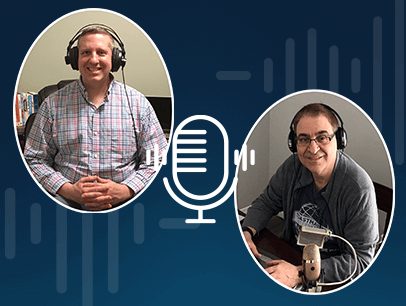
Listen to The Toastmasters Podcast to hear more from Greg Gazin and Ryan Levesque.
I also found his insights helpful in improving my impromptu skills, not just by answering a question on the spot, but by using various practical techniques. On The Toastmasters Podcast, (#235) and ToastCaster (TC176) he shared a number of useful approaches. One example was “What? So What? Now What?” Define the facts, explain why they matter, and outline the next steps.
Another lesson I learned was a powerful one about difficult, sensitive, or personal questions. Greg Van Borssum, AS, speaks openly about how he considered taking his own life, and we discussed this in his episode (#089). Later, I struggled with how to ask someone to share their thoughts, concerned that I might be asking them to relive a dreadful experience. I reached out to Greg for advice. “Use phrasing like, ‘Do you mind if I ask you a personal question because it might help me or the audience?’” he explained. “If it comes from a place of learning or sharing knowledge, you’ll likely get a positive response.” And I did.
I also learned that good conversations sometimes require vulnerability from the host, not just the guest. Even after hundreds of interviews, not every conversation goes smoothly, and there were moments when I questioned whether I was doing it right. I felt impostor syndrome.
In my interview with Maureen Zappala, DTM, AS, on that topic (#267), she described our circle of expertise as a dot. She suggested that we say, “I’m proud of my dot. I have a cool dot.” When impostor syndrome surfaces, I remind myself of my dot, and that what I know and my experiences have value.
Podcasting has been transformational. It’s been an incredible experience where I continually learn new skills and uncover more about myself. And I also get to meet some amazing people along the way.
But most of all, podcasting is a lot of fun. Here’s to the next 300 episodes!
Editor's Note: You can listen and subscribe to The Toastmasters Podcast wherever you get your podcasts, including Spotify, Apple, and YouTube. For more information, including episode notes, visit toastmasterspodcast.com.

Share this article


Greg Gazin, DTM is a Past District Governor and recipient of a 2009 Toastmasters Presidential Citation. He is a veteran podcaster, hosting The Toastmasters Podcast and producing the award-winning ToastCaster. He is also a writer, author, speaker, and member of Spiritual Living Toastmasters in Edmonton, Alberta, Canada.
 Previous Article
Related Articles
Podcasting
Tune In to The Toastmasters Podcast
Podcasting
Is There a Podcast in Your Future?
Podcasting