
 Previous
Before college, Heather Turner, DTM, debated between two career paths: studying graphic design or attending culinary school. She chose the latter. Over 20 years, she rose from entry level to executive chef positions.
At her last executive chef role, Turner worked at least 16–18 hours each day for three months without a day off. She wasn’t seeing her family. She developed an ulcer and high blood pressure. It was time for a change.
With her Toastmasters skills and experience, the help of a mentor, and resilience, Turner, a former member of Cromwell Community Toastmasters in Cromwell, Connecticut, successfully navigated multiple career transitions, including into graphic design, social media, and consulting.
Like Turner, many people may want to switch professions, and may make several such changes in their lifetime. You may want to as well—because of too much stress, too little enjoyment, a change of priorities, not enough pay, a desire for more growth, or a combination of factors.
Changing careers can be daunting, a process often mired in stress and uncertainty. The journeys of Turner and other Toastmasters spotlight the steps you can take—including networking, working with mentors, and honing communication, leadership, and other skills in Toastmasters—to help you forge a rewarding transition to a new profession.
“These days, I’m excited about what I’m going to learn, and I don’t let the fear stop me.”
—Gauri Seshadri, DTMMake a Plan
When Turner was ready to move on from being a chef, she explored her options. She had never lost her early interest in graphic design. “I had the computer equipment, the graphic design programs and knowledge, and the passion for it,” she says. After conducting a self-assessment, she put a portfolio together.
The timing wasn’t good. It was the dot-com bust in the United States—a time when internet startup companies were failing and technology stocks were plummeting in value. Turner wasn’t receiving any responses from her job applications.
A friend suggested she start her own graphic design business. Turner found a business mentor who helped her develop a detailed and realistic plan to move forward, including making a projected budget for the amount of money she needed to live on. She worked part-time as an office manager for six months while she built her graphic design business.
“My business would have failed without [my mentor’s] guidance on so many issues.”
Turner also credits Toastmasters for providing the skills she needed to move from behind the scenes to getting in front of people. “When I started my business, my mentor talked to me about networking,” she says. “I dreaded it. But Toastmasters taught me so much about getting out of my skin and out of my comfort level and starting a conversation with someone I don’t know.”
Toastmasters also taught her about constructive feedback and better time management in an office-type environment.
After eight years, Turner transitioned into social media, when the field was just developing. She delved deep into the medium and started offering related services and training people on it.
Now semi-retired, she offers hospitality consulting and marketing services and has written three related business books. She also mentors small-business leaders.
“If I hadn’t been in Toastmasters, I probably wouldn’t be a mentor now, as I wouldn’t be as comfortable mentoring people,” she says.
 Networking and honing communication skills help people navigate career transitions.
Recognize Transferable Skills
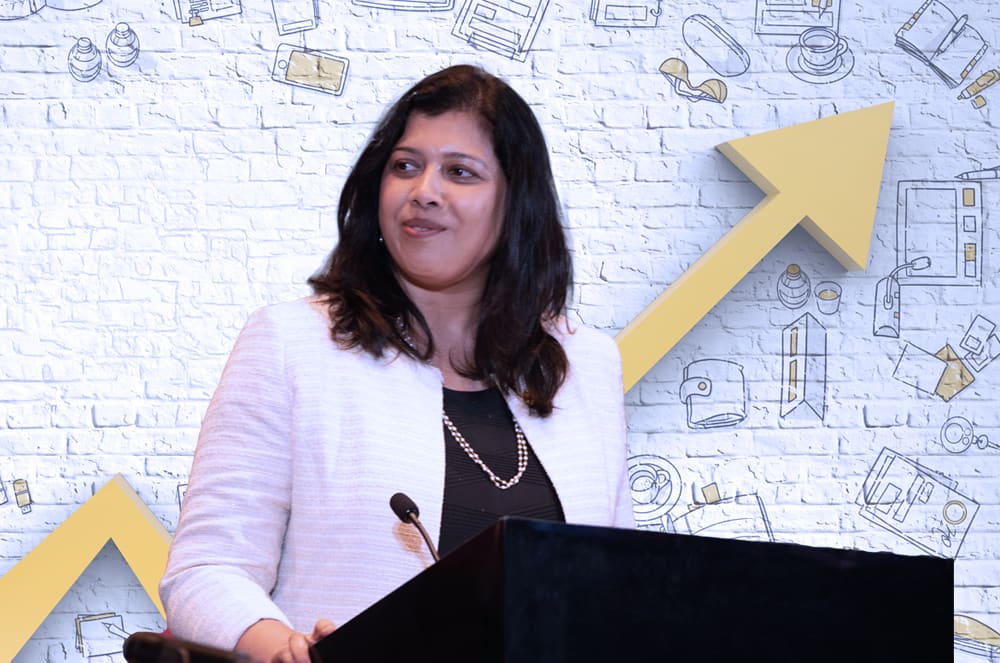
Gauri Seshadri, DTM, Toastmasters First Vice President and a member of WeSpeak Toastmasters Club in Bengaluru, Karnataka, India, has changed career paths several times, each transition spurred by a connection or skill she developed in Toastmasters.
She grew up in India and moved to the United States for graduate school, studying chemical engineering and spending more than half of her career in the environmental industry. She joined Toastmasters in 2005, while working in Colorado.
When she returned to India, she ran into constraints. Environmental regulations vary by country. While Seshadri was willing to relearn and work her way up the ladder again, she says there were age limits for junior-level work in India. She was above the age range and no longer eligible, so she had to reconsider her options.
At the same time, Seshadri was climbing the Toastmasters ladder in India. After serving in multiple District officer roles, she became District 92 Director in 2015.
Her Toastmasters experience helped her realize she missed working with people in her full-time job—the conversations, the energy from collaboration, and the opportunity to learn from others. Someone who had seen the conference Seshadri organized as District Director reached out with an opportunity to organize India’s first national health equity conference.
“That experience helped me see how the skills I’d built over the years—project management from my environmental consulting work and people leadership, training, and event organization from Toastmasters—were transferable and how they were valuable in an entirely new context,” says Seshadri.
Organizing the health equity conference opened up a range of new possibilities she hadn’t considered. Until then, she had seen her career mainly through an environmental lens.
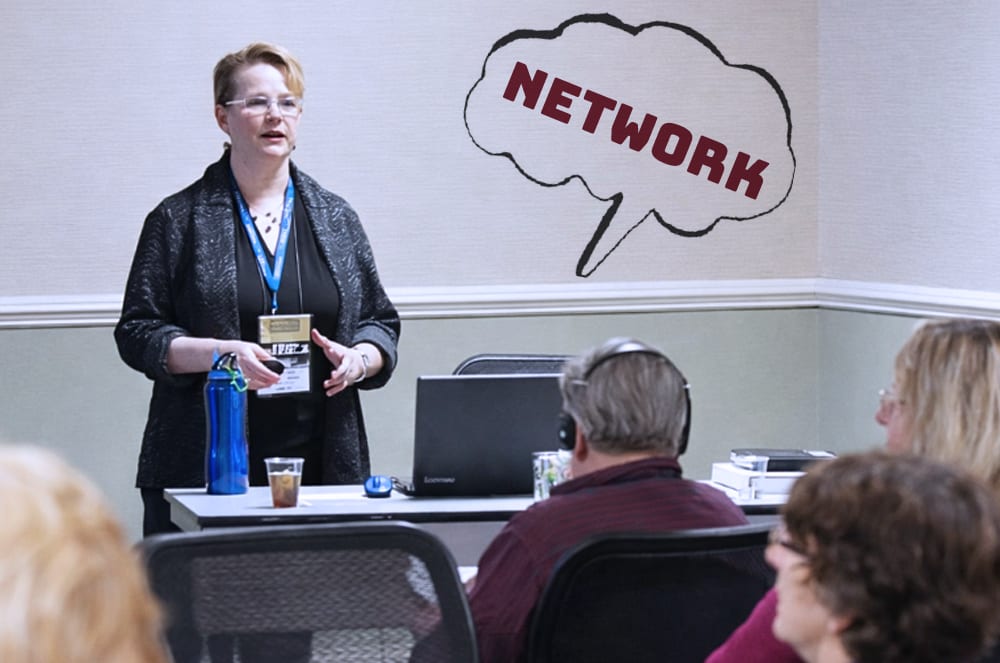 Heather Turner, DTM, worked in the culinary field coming out of college, and has successfully changed careers several times since then.
Tap Into Your Network
One of Seshadri’s Toastmasters club members was in the travel industry; he knew she had organized the health equity conference and had a passion for travel. He proposed a corporate travel program, tailored to employee business travel. Together, they developed strategies to market to corporations and conducted offsite events.
After a while, another Toastmaster reached out, noting Seshadri’s experience in team leadership and management, and asked for her help. The person was at an organization working to improve client retention and team stability. Seshadri joined the digital marketing and branding company and soon was expanding her portfolio with social media and other work.
Later, when Seshadri was International Director, one of her Toastmasters mentees asked her to join him in the game-based learning field. He was looking for someone from the corporate world who knew how to work with different generations of people and had experience empowering people. She joined the company in July 2022 and is still working there today.
Don’t Be Derailed by Fear
Before she ever joined Toastmasters, one of Seshadri’s bosses offered her an opportunity to give a sales presentation for a program she helped create. She refused. Instead, she said she would teach him what to say. Her boss suggested she go back to her office and think about what she had just said.
“It took me two or three weeks to realize I was the biggest obstacle in my own career,” she says. “My fear was stopping me from stepping up.”
Even though she can still be nervous and even skeptical about different professional roles, transitions, or industries, Seshadri is now open to possibilities. She knows something is right when she wakes up curious and energized. “These days, I’m excited about what I’m going to learn, and I don’t let the fear stop me,” she says.
“Toastmasters taught me so much about getting out of my skin and out of my comfort level and starting a conversation with someone I don’t know.”
—Heather Turner, DTMBe Open and Curious
Tebogo Matolo, from Thriving Toastmasters in Rustenburg, North West Province, South Africa, also gets excited about learning something new. A qualified geologist, she worked in the production side of the mining industry for about 10 years.
At that point, she didn’t feel challenged anymore. “Once you are familiar with a particular mine or area, there are no new discoveries,” says Matolo. “Your job is just to direct mining. I wasn’t learning anything new.”
The culture in production was also not very conducive to females at the time, so she wanted to move into an area that required professionalism and offered new adventures.
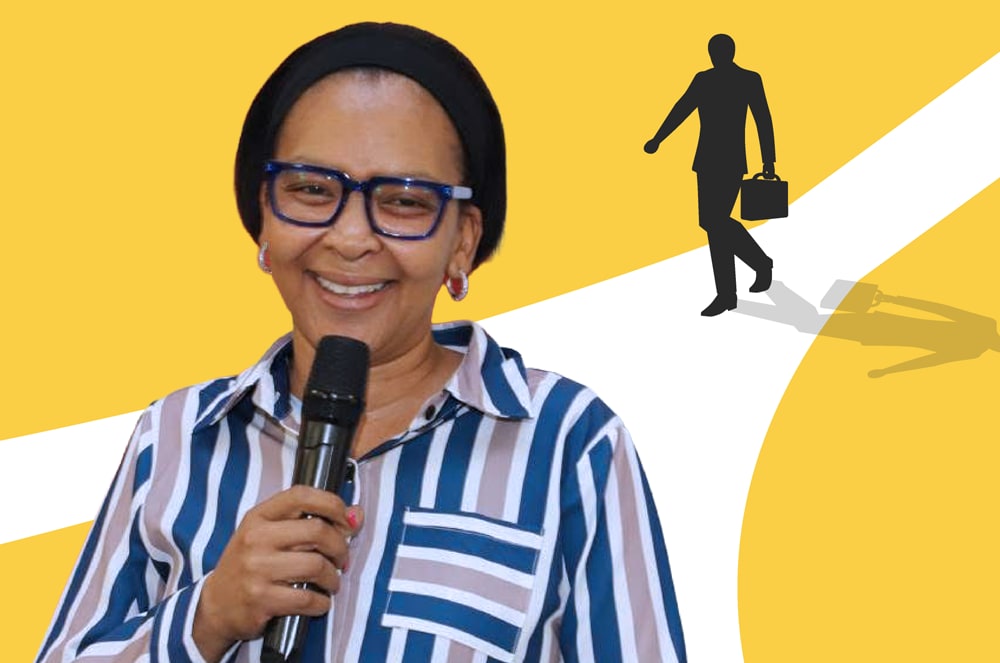
Matolo was hired for a job within enterprise and supplier development (ESD), which focuses on building capacity and helping establish start-up small, medium, and micro-businesses. It was a new field for her.
After she was hired, she educated herself on the relevant policies and laws. She asked family members to test her on her knowledge and aligned herself with people in the field. She also registered for a management development program at a nearby university.
As part of her new role, she gave speeches and led workshops. She also had to build trust with business owners and advocate for small businesses to large corporations, which also involved many negotiations. She joined Toastmasters to help her succeed. “Toastmasters gave me all the skills I needed to perform these duties,” says Matolo.
Eventually, the company began downsizing, so Matolo started job searching just in case. She joined a businesswomen’s association and connected with others throughout Toastmasters and her other networks.
“Part of my job was connecting with funders and big corporations,” she says. “In that engagement, you meet a lot of people. I was sent a job opening from one of my contacts.”
Go for It
Matolo took a leap of faith and got the job, which was in the social-community development space. This expanded her portfolio, as ESD is one pillar of social-community development. In addition to small businesses, she’s now working on initiatives within the education, health, and livelihood areas.
“Because of the downsizing, going into the social space was not by choice—but it ended up much better for my growth than where I was coming from,” says Matolo. “It was the universe forcing me to go into where I’m actually supposed to be.”
Changing careers gave Turner, Seshadri, and Matolo exciting new challenges and a fulfilling professional journey. “I wish I had known it was okay for my career to have a lot of different chapters—that I didn’t have to live my entire life in one career like my parents did,” says Seshadri. “I would have saved a lot of worry and self-doubt. With each transition, work is getting to be more intentional and more fun.”

Share this article


 Tips on Making a Career Transition
Jennifer L. Blanck, DTM , has more than 25 years of career development and advising experience. She is a member of 5-Star Toastmasters Club in Arlington, Virginia, and AAMC Toastmasters in Washington, D.C., as well as a regular contributor to the Toastmaster magazine. Learn more at jenniferlblanck.com.
 Previous Article
Related Articles

Mentorship
Advantages of Being a Mentor

Professional Development
Preparing for Successful Networking
Leadership Skills