
 Previous
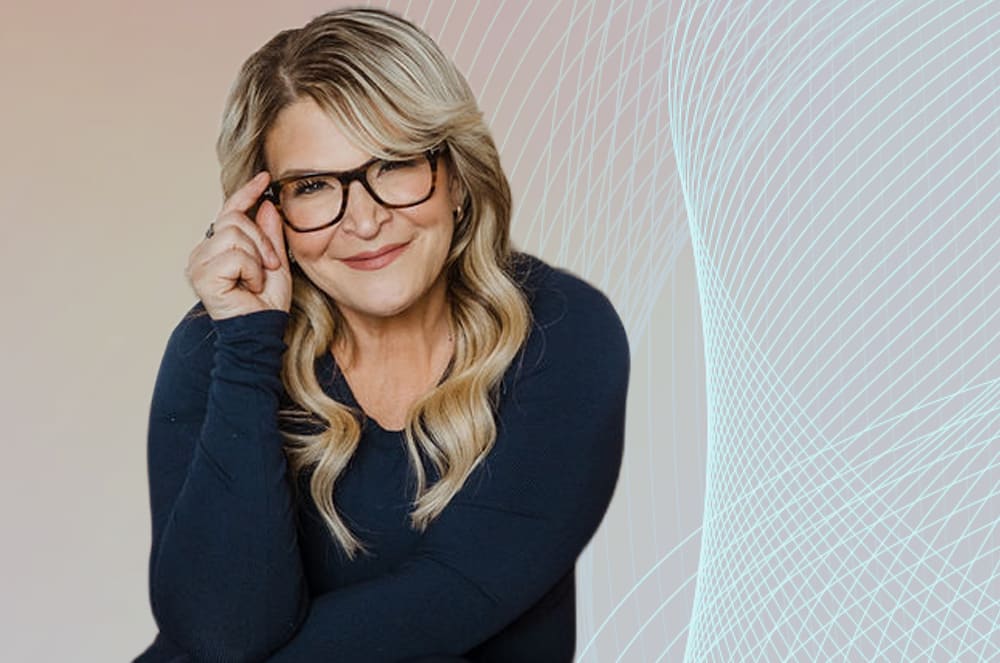
Who would you envision as the ideal speaker for these times? It would have to be someone brash enough to cut through the truth crisis, someone charismatic enough to cut through the attention crisis, and someone with a strong enough message to get the audience truly thinking.
You might be surprised to learn someone like this exists: Jody Carrington, Ph.D., a clinical psychologist in Canada, is just that person. She has both a loud voice and a soft tone, she’s eloquent and analytical but also uses casual language when among friends. Most critically, she has an uplifting approach to surviving what she says is society’s real crisis—a loneliness epidemic.
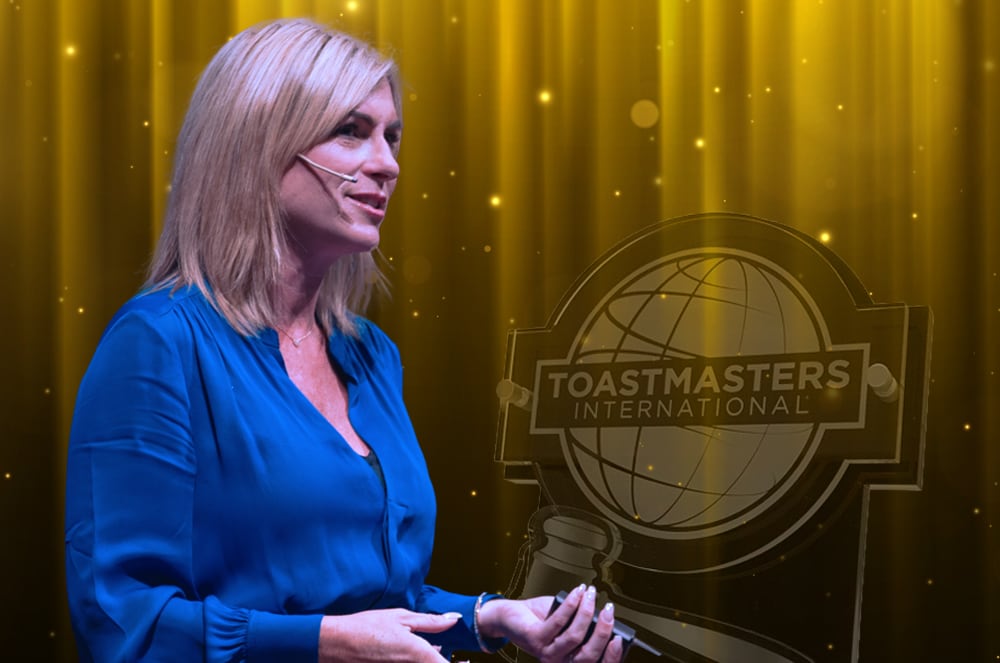
Carrington will give the keynote presentation, titled “Decoding Emotional Intelligence,” at the 2026 Toastmasters International Convention in Vancouver, British Columbia, Canada, this August.
If you’re not familiar with emotional intelligence, the phrase may strike you as mere buzzword. But with her training in psychology, her breadth of subject matter expertise, and her passion for helping people connect, there will be no room for platitudes in Carrington’s talk.
“She wants to on-the-ground inspire people, to invigorate people every day,” says Jeff Lohnes of Talent Bureau, a Canadian speakers bureau and talent advisory firm that manages Carrington’s speaking engagements. “But she also wants to make an impact and help guide the right policies both at national and global levels.”
Carrington has addressed audiences of several distinguished entities, including the United Nations.
“In this very noisy, overwhelmed world, we’re losing access to the best parts of humanity.”
—Jody Carrington, Ph.D.“What I said at the United Nations is if I had an opportunity to intervene, where I think the biggest bang right now is looking for the helpers that do the most [emotional] regulation.
“I think it will be the greatest lesson we teach our children and so it has to be the greatest lesson we teach leaders like our teachers, our police officers, our foster parents.”
So where does emotional intelligence fit into that goal?
“The heart of everything I talk about regarding decoding emotional intelligence is really about ‘how do we get back to the best in us?’” says Carrington. “In this very noisy, overwhelmed world, we’re losing access to the best parts of humanity.”
An Evolving Education
Her current vision began in a less expansive, less visionary field. She earned a master’s and Ph.D. in clinical psychology and focused her research on police psychology.
“I wanted to understand organizational stress and trauma,” she says. She was encouraged to do a hospital rotation treating children during her residency, but she had to be talked into it because she preferred working with adults. Once she started working in a locked inpatient psychiatric unit for children, she overcame her qualms about working with kids despite their significant behavioral challenges.
“I love those babies,” she says. “They really taught me about asking this question—not ‘What is wrong with this one?’ … but ‘What happened to this one?’”
After her experience at the hospital, she eventually married and had children of her own. The family moved to a small town, where she started a private practice and began consulting with both educators and police departments, focusing on “the complexities of humanness,” as she frames it.
“Then it just evolved into a speaking career,” she says.
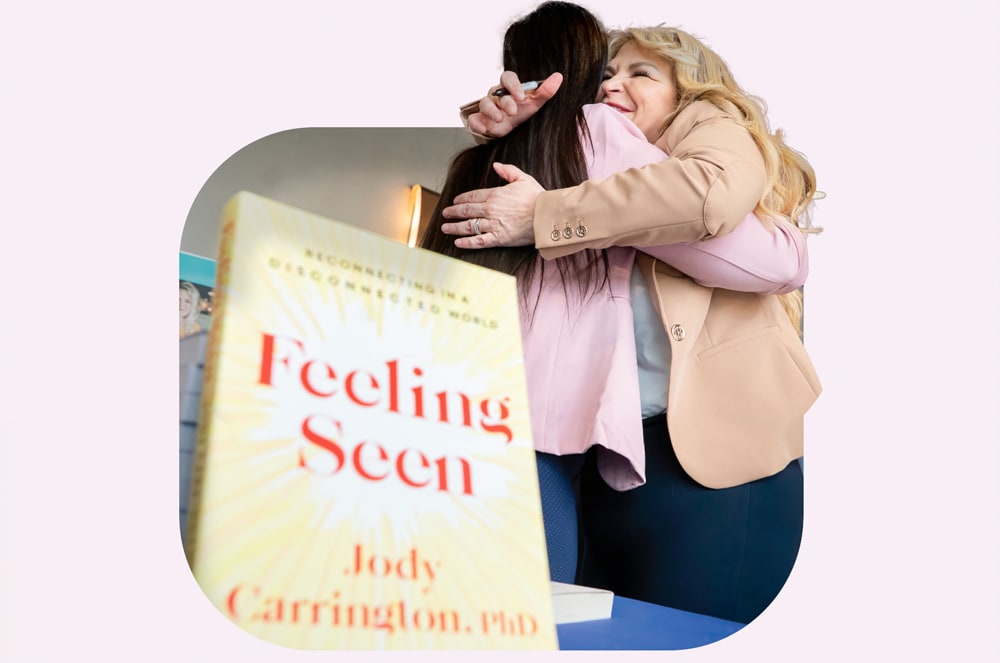 Jody Carrington shares hugs while promoting one of her books.
A Speaking Journey
She started with small conferences, spoke for free, and even brought snacks for the audience. Today she has a formidable speaking career, focused primarily on the discoveries she made in her clinical practice. She has authored three books, with a fourth on its way; she hosts a podcast called Unlonely, which features episodes with titles like “Modern Day Relationships” and “What Happens After the Worst Day of Your Life?”; she is still a practicing therapist.
Lohnes, of the Talent Bureau, has observed her growth as a speaker. “There are two groups I find sometimes have an outsized response with Jody,” he says. “One of those is business owners—very highly motivated individuals. Then also a lot of frontline workers, specifically educators and healthcare workers, absolutely love her—they’re out there doing the hard work healing. She helps them feel seen, re-energizes them, and reconnects them to the purpose of why they’re doing this.”
In today’s world, Carrington is particularly concerned with human connection, recognizing in all aspects of her work that we are more disconnected from each other than ever in this world of increasingly fragmented interactions.
“We’re neurobiologically wired for connection,” she says. “If you think about the square footage of the house that your grandparents were raised in and the square footage of the house in which we raise our babies, you’ll know that even the size of the beds that our grandparents slept in was smaller.”
She also addresses the role of advancing technology in the decline of connection.
“It is so fascinating in this lifetime to have a front-row seat into the technological explosion that is AI—but I promise every organization I’m in front of that if they understand that the only ‘AI’ that’s going to matter to grow a business, to maintain relationships, is authentic interaction, their organization will change in this time where we are desperate for connection.”
Her advice resonates for business owners, employees, and public speakers. “We’re talking about how we manage our anxiety, because when anxiety takes over it steals your brilliance,” she says of perhaps the most common foil to confident public speaking.
“I’ve never had so much hope for humanity,” she adds. “But we’ve never been this sleep deprived, this attention fragmented, and this divisive; it’s a world where we have never needed connection more. I love when I get to take the stage and the conversation’s really going to be about the role of speakers to sew back together and inspire people to come back together as humans.
“We were never meant to do any of this alone.”

Share this article


Ruth Nasrullah is a freelance journalist based in Houston. She has a master’s degree in journalism and a master of fine arts degree in creative nonfiction. She has written on an array of subjects and has bylines in publications such as the Houston Chronicle and The Washington Post. She is married with an adult daughter and two adult stepsons.
 Previous Article