
 Previous
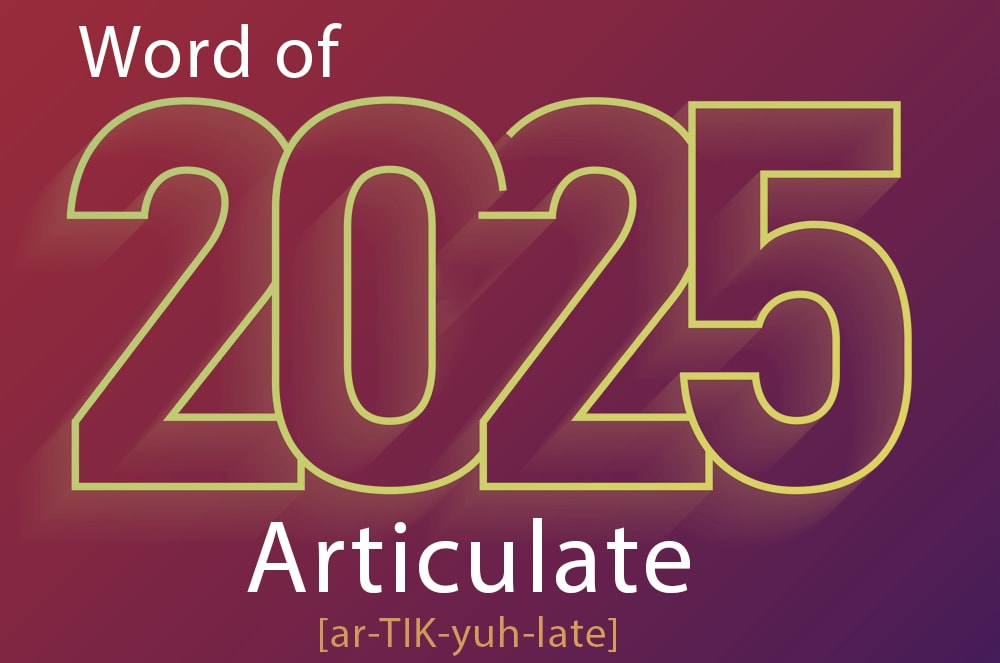
In December, a Toastmasters LinkedIn poll asked members the question “What should the Toastmasters Word of the Year be?” After the votes were in—more than 1,200 of them—the winning word was:
Articulate.
Thirty-one percent of respondents chose that word, which was followed closely by eloquent, tapped by 29% of the voters. Twenty-one percent selected envision, while 20% opted for impromptu.
Members weighed in. Marvel Kummer, DTM, of Minnesota, wrote that she voted for articulate “because that is where I have grown and stretched myself in Presentation Skills and Leadership Skills this year using technology.”
However, Esohe Irabor, Ph.D., of Washington, D.C., advocated for eloquence as the top Toastmasters term, “because that’s what the culmination of all the #skills we #build in #Pathways leads to.”
Dictionaries also chose their words of the year. The Oxford University Press announced its victor as rage bait, which they defined as “online content deliberately designed to elicit anger or outrage by being frustrating, provocative, or offensive, typically posted in order to increase traffic to or engagement with a particular webpage or social media account.”
If the choice of rage bait angers you, perhaps you’ll be happier—or not—with Merriam-Webster’s winner: slop. Definition: “Digital content of low quality that is produced usually in quantity by means of artificial intelligence.”
Noting that their “human” editors picked the word, Merriam-Webster cited 2025 examples of slop as everything from bizarre videos and weird advertising images to AI-written books and talking cats.

Share this article


 Previous Article