

 Previous
Do you ever wonder why Robin from accounting got promoted instead of you? Or why Alex, who started in the company long after you did, is much more successful? You know you’re smart, capable, and probably more skilled than they are. Yet you’re watching other people pass you by while you’re standing on the sidelines, wondering what is wrong with you.
I am not blaming you, because I was the same way.
The people who are most qualified in their area of expertise seem to suffer the most from impostor syndrome.
In my first business as a personal fitness trainer, I struggled getting clients for a long time. I watched other trainers take personal phone calls as they worked, show up late to sessions, and even eat while their clients struggled through a session. Meanwhile, I always paid full attention to my clients, showed up on time, and never ate while working. I also invested time and money to get 12 different certificates, hoping they would catapult my business forward.
Yet the other trainers always had a full roster of clientele, while I had to take on a part-time job to pay my bills.
It wasn’t until I made three important mindset shifts that I was finally able to grow my business. These thought patterns can hold you back and ultimately lead to resentment rather than success.
-
Re-Define Impostor Syndrome
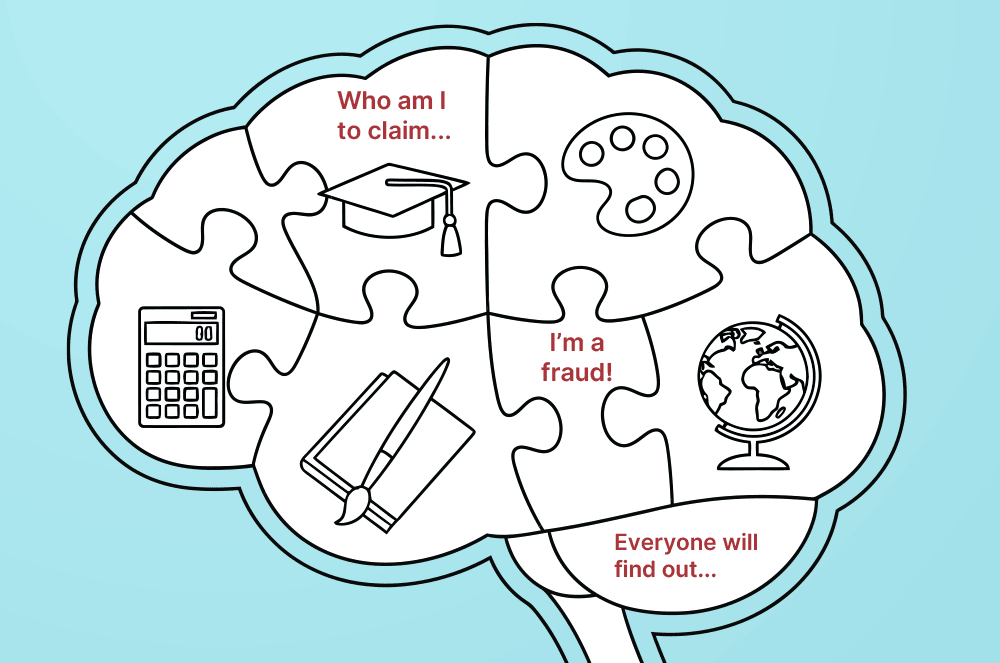
Impostor syndrome refers to the feeling that you’re incompetent—at your job or something else in your life—and just fooling people, even if all evidence points to your capability. It includes thought patterns such as: Everyone will soon find out I don’t know what I am talking about, or others know so much more than I do—who am I to claim I am an “expert”? I’m a fraud!
Those feelings of being an impostor and “fooling” people into thinking you’re capable are very common and can undermine even extremely qualified people.
What I personally find fascinating about impostor syndrome is that even if you overcome it, it usually comes back. Every time you are offered a challenging opportunity or reach a new career milestone, the feeling can pop up again.
If we can’t get rid of impostor syndrome, why not just redefine it? Instead of seeing it as a flaw or proof of your inadequacy, see it as an indicator. An indicator that you are about to level up, that you are reaching the next step in your career or life. This takes a bit of time, but the more you practice, the sooner you’ll be able to see impostor syndrome for what it is: a guiding light.
Interestingly, it’s the people who are most qualified in their area of expertise who seem to suffer the most from impostor syndrome. And that makes sense because, ironically, in order to have the feeling of not knowing enough, you need to be aware that there is, in fact, a lot of knowledge you don’t know. If you think you have it all figured out, you will stagnate and develop an oversized sense of confidence and superiority.
Being haunted by impostor syndrome actually indicates your willingness to grow and learn, as well as your ability to acknowledge that you don’t know everything. All of these feelings leave you open to pushing yourself.
Daily Practice Tip: Whenever you feel impostor syndrome creeping up, pause. Take a deep breath and remind yourself: This is a sign that I am on the right track.
-
Escape the Need To Be Noticed
Many of us believe that just becoming great at what we do will be enough to get recognized for our abilities. Surely my boss will notice that I’ve been upleveling my work lately. Surely the clients will come once I have all the knowledge I need to serve them.
Unfortunately, that’s not how it works. Hard work doesn’t speak for itself anymore.
In today’s world, patiently waiting for someone to acknowledge and recognize your hard work will likely get you overlooked. Many people find it hard to flaunt success or brag about a project done well. Sometimes it’s a case of being too humble, or having low confidence, or simply feeling that bragging is rude. However, the fact is that successful people are often not the ones who are best at what they do, but the ones who are the most vocal.
Learning how to sell yourself, how to become visible, and how to position yourself is crucial. Professional growth is no longer only about competence but about visibility, clarity, and ownership.
Daily Practice Tip: Every morning, ask yourself: How can I be more visible today and show others what I have to offer?
-
Let Go of Your Past Identity
When we want to step into a new role, whether it’s a promotion, a new job, an entrepreneurial venture, or any type of new position, we need to let go of aspects of our past selves.
That’s easier said than done. We often identify so much with our old roles that we reject opportunities that come our way because we feel they don’t match this identity. Maybe you’re in a new position and are offered the opportunity to present a new project, but you decline because you don’t see yourself as a “leader.” Or you’re a new business owner and discover an exciting opportunity for your company, but don’t pursue it because “this is something for bigger companies, not for a small business like mine.”
These are also perfect opportunities for impostor syndrome to creep back in. And so the cycle continues. To step into your new identity, you need to stop protecting the old persona and start deliberately building the new one.
Daily Practice Tip: Practice the behaviors that your new role, your new identity, requires. If you want to become a leader, practice leading! While this will likely feel uncomfortable at first, soon you will feel the shift happening. Identity follows behavior, not the other way around.
When you apply these mindset shifts, professional growth becomes less about collecting skills, certificates, and licenses, and more about using your skills intentionally to actually grow and finally reap the rewards of your hard work.

Share this article


Jennifer Fidder is a social psychologist, hypnotist, and speaker who helps people find happiness, confidence, and success. Her company, Jennifer Fidder Coaching LLC, offers hypnosis-based coaching sessions, self-hypnosis and confidence workshops, and speaking engagements for university students, corporations, and retreats.
 Previous Article
Related Articles

Personal Growth
A Surprising Truth Behind High Achievers

Professional Development
Advance Your Career Through Self-Leadership

Professional Development