

 Previous

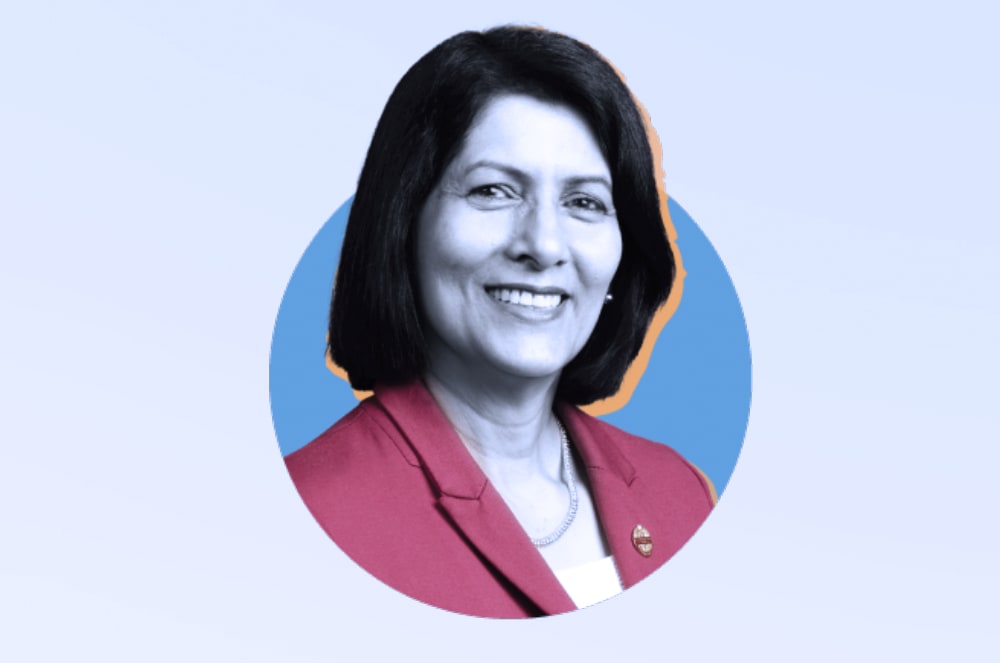
This month we’re talking to Accredited Speaker and Certified Speaking Professional Sima Dahl, DTM, a branding expert, keynote speaker, corporate trainer, author, and coach. She is known for her “Sway Factor” philosophy, a mindset that empowers professionals to stand out, stay relevant, and be in demand. Sima helps her clients increase their own Sway Factor and harness their unique brand of executive presence.
What does executive presence mean to you?
My favorite definition is from the International Institute for Management Development: “Executive presence is the ability to project confidence, authority, and leadership in a way that inspires trust and motivates others. It involves a blend of behaviors, communication skills, and personal qualities that convey a sense of competence and poise. People with executive presence are able to command attention, maintain calm under pressure, and make others feel confident in their decision-making abilities.”
Why is developing executive presence important?
Executive presence is a critical skill for career advancement, for influencing others to achieve desired outcomes, and even for managing volunteers. It is essential in any situation where you hope to be seen as a leader worthy of following.
How can someone build executive presence?
First, cultivate gravitas (composure) by stepping outside your comfort zone and taking on what I call “thoughtful risk.” That may mean giving an advanced speech, volunteering for a club leadership role, or offering to take on more responsibility at the office. Second, lean in and speak up in work meetings, and offer to evaluate a speech at your club. Finally, stand tall, shoulders back, and keep your gaze steady.
If someone is uncomfortable with self-promotion, what’s one visibility habit that feels authentic but still gets them noticed by decision-makers?
Showcasing soft skills is what most often results in career advancement. A powerful way to do that is to speak clearly, without self-censorship. The more comfortable you become presenting your ideas, stating your accomplishments, and asking clarifying questions, the more likely you will be perceived as having leadership skills.
What is your top tip for making a positive first impression when networking?
Maintain an open posture, smile, and show excitement and interest in the other person. Put them at ease, even when you feel uneasy yourself. As we say in the speaking trade, take care of your audience!
Hometown:
Chicago, Illinois, and Los Angeles, California
Number of years in Toastmasters:
14
Profession:
Keynote speaker and corporate trainer
Hobbies:
Travel, live music, road biking, and skiing

Share this article


 Previous Article
Related Articles

Communication
5 Questions With Jefferson Fisher

Speechwriting
5 Questions With Saby Sengupta
Club Experience